

Conversation Theory in Technology Design
Musini, Musicolour, and Gordon Pask

One of my favorite toys as a toddler was Neurosmith’s Musini. The toy was a small white unit that sat on the floor. It had a dial to control responsiveness, and different music genres you could select (though I’m not sure we ever owned the cartridges that unlocked access to more than just classical). It lit up and played music in the genre of choice that was supposed to respond to motion, adjusting tempo and adding sounds based on the users’ dancing and playing. Ideally, this would stimulate musical thinking and motor skills through interactive play. However, the machine’s responsiveness left much to be desired, especially when more than one child was playing.
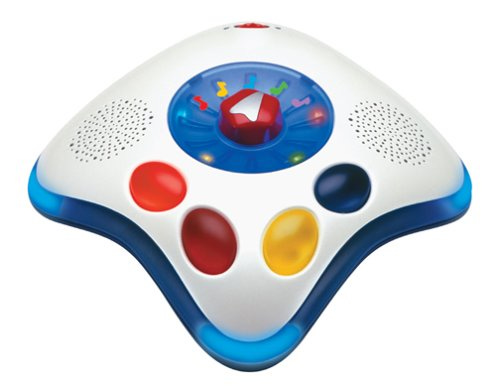
My twin brother and I would run in circles around it, purposely making ourselves dizzy and laughing as it failed to react to both of us at the same time. We puzzled over the method to its madness and wondered why it would register my brother’s jumping and not my running, and spent ages trying to work it out. We never quite understood that the mystery of the toy was actually owed to failure, but it hardly mattered; it had done its job in entertaining us, and more importantly, imploring us to think about how our actions would affect it, and how it would in turn affect our actions, even if it was not a 1:1 correlation.
In cybernetics, this is called a feedback loop. A feedback loop is when the output of a system--- in this case the noises and music Musini made--- is fed back into the system, influencing input--- my brother and I’s playing--- and future output, new music Musini made, based on our playing, which was already reactive. Musini took the scientific, mathematical concept of a feedback loop and applied it to music, play, and education, a feat that despite varying success was unique, deep, and innovative for a children’s toy in an era where screens and branded characters ruled the toy landscape. While it had its flaws, Musini and the design principles that informed it offer a model for designing interactive, value-driven technology that sparks wonder and co-creation, a model I argue is increasingly important in today’s technological landscape.
With Musini, the toy was what you, the user, made it. Play wasn’t predetermined or preprogrammed, but was variable, dynamic, and provided users with freedom and control, all the while engaging both motor skills and critical thinking skills. Musini is an outcropping of the value-driven technology design that emphasizes conversation and interaction with cybernetic principles, a kind of design pioneered by cyberneticist Gordon Pask. Pask designed Musini’s spiritual predecessor, Musicolour, and more importantly, championed the idea that technology could be used to inspire and drive creativity, not snuff it out. In the midst of our current technological anxiety, Pask’s ideas matter now more than ever, and perhaps suggest a more hopeful vision of the future that prioritizes human agency.
Musini is an example of simultaneous play and learning called edutainment--- a portmanteau of education and entertainment--- that was spearheaded by cybernetic and interdisciplinary revolutionaries in the 1950s and 60s. Edutainment is based on the principle that learning and entertainment can occur at the same time, and that it is actually beneficial for them to, because people learn better when they are having fun, and when they are playing an active role in learning. Pask was one of the main proponents of edutainment, and postured that involvement and interaction in learning was conducive to better learning based on the cybernetic principle of a feedback loop--- or a conversation. Pask’s theory was aptly named conversation theory. Conversation theory states that learning relies on input--- a user’s current thoughts or queries--- output, or response--- adjusted input, user response to output--- and then adjusted output, and so on, until both entities conversing were closer to understanding what had previously been opaque.
Pask put this theory into action, developing several interactive machines that are imbued with his core values of creativity and human agency, the capacity for humans to play an active role in their own lives--- values which when applied to education, improve it. Previously, the ideas that feedback loops could be applied to the arts--- much less toys); or that feedback loops could be educational; or that education could be dynamic, interactive, and participatory, were somewhat revolutionary. Pask was such a revolutionary. He worked diligently and innovatively to combine these ideas, revolutionizing cross-disciplinary collaboration, art, education, and cybernetics on the way with his value-driven design. Musini, my toy that embodied these values, is the descendant of a much earlier invention of Pask’s (and Robin McKinnon-Wood’s), another machine of responsive light and sound: Musicolour.
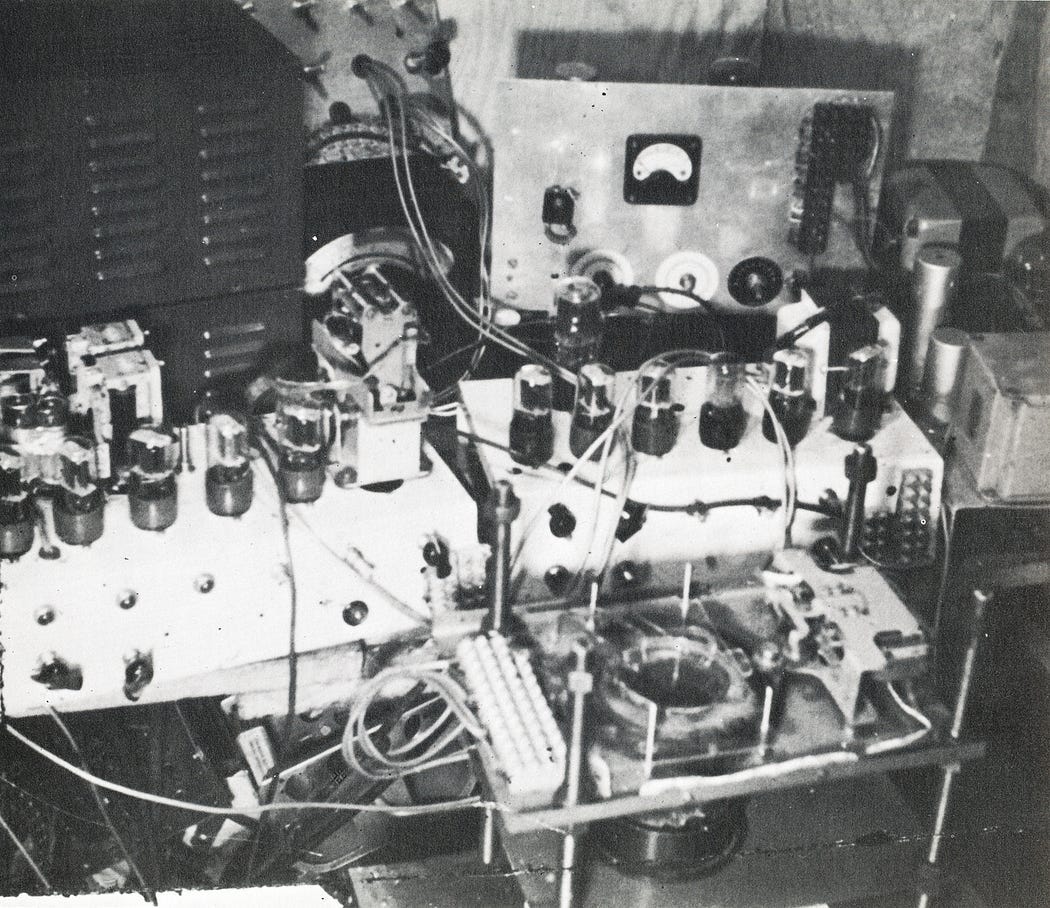
Musicolour was designed specifically for musical performances, and actually had gradually weaker responsiveness built in. It consisted of a machine that would create visual patterns and lights correlated to sound, rather than music and lights correlated to motion like with Musini, but the systems’ operations were very similar; both reacted and responded to user input with the goal of affecting future input, creating more dynamic playing or music. Musicolour hoped to engage musicians in creating more inspired, innovative, and unique entertainment, eventually forcing users to vary their style, tempo, and volume to elicit the desired reactions from Musicolour. This worked by way of programmed desensitization. Initially, all sounds would activate Musicolour; after a while, its responsiveness would decrease, demanding more from the user and incentivizing creativity. If the user responded in kind, the music and visuals were both sure to be more vibrant and engaging than if the gradual desensitization did not occur.
Musicolour reflects Pask’s commitment to creativity and human agency through value-driven design. Instead of seeing computer systems as a way to mechanize and eliminate the need for creativity, he saw a way they could improve and encourage it. Though he went on to design several other systems that utilized the cybernetic principle of the feedback loop, engaging the user by demanding participation and collaboration to create, Musicolour stands out to me not only as an indication of Pask’s enduring legacy--- as is evidenced by his influence on my childhood toy--- but of the staying power and urgency of his ideas.
In a time when advances in computer systems --- like those in the realm of artificial intelligence --- are threatening our creativity and our agency, Pask’s value-driven inventions and their legacy are even more important. We are now tasked with envisioning a path forward that enlists these new technological systems in the service of creativity and learning— in the improvement of the self and the world--- where technology assists instead of replaces us; we must find a path that employs these systems rather than submits to them. Pask’s projects suggest one way forward: we can work to center creativity, agency, collaboration, and conversation in technology design, pushing ourselves further to create, to experiment, to learn, to play. Pask’s ideas remind us that technology can work with us and challenge us to be better, instead of replacing or overshadowing us. To Pask, technology was the means to more creativity and more wonder--- not less. We could benefit greatly by following in his footsteps and designing with an emphasis on technology’s ability--- and job--- to assist us in our age-old goals: growing human knowledge, art, achievement, and understanding.
Thanks for writing this, it clarifies a lot. The Musini bit reminded me of my Pilates instructors *expectations* vs. my execution. Some feedback loops are harder to close, huh? So insightful!